
A well-chosen cut can soften the jawline, add height where it flatters, and draw attention to your eyes and cheekbones. From face-framing layers and curtain bangs to lobs, bixies and short curls, the right style can complement your face shape and hair texture. This collection brings together real salon and client photos, each chosen for a clearly visible cut and a flattering line below the cheekbones, so you can compare options side by side. Whether you want easy short hair, soft waves or long layers, these ideas can help you find a cut to show your stylist, with notes on who each suits.
37 Best Haircut Ideas to Soften a Double Chin
1. Long Layers with Curtain Bangs
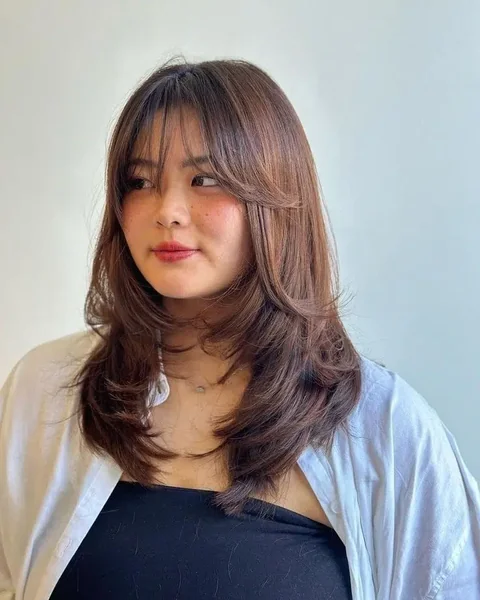
Long layers that start below the chin and fall past the collarbone keep the eye moving down instead of across the jaw. Soft curtain bangs part in the middle and sweep to the sides, framing the cheeks and adding gentle vertical lines. Ask your stylist to keep the shortest layer at or below chin level.
2. Face-Framing Long Layers
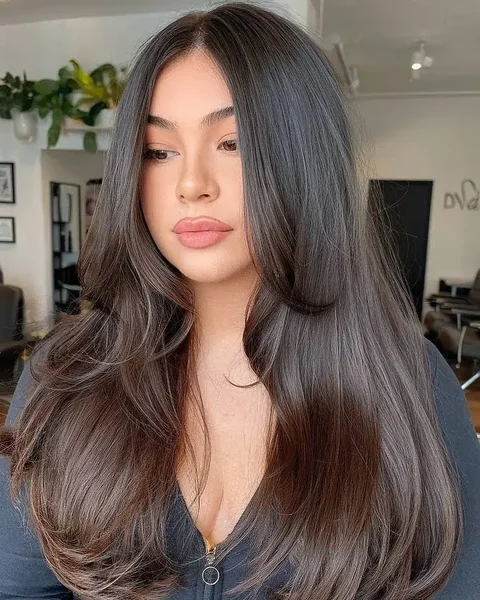
A center part with long face-framing layers curves in around the cheeks and jaw, softening a fuller lower face. The length past the chest adds balance, so the chin area is not the focal point. Blow-dry the front pieces slightly away from the face to keep the line long and smooth.
3. Copper Layers with Curtain Bangs
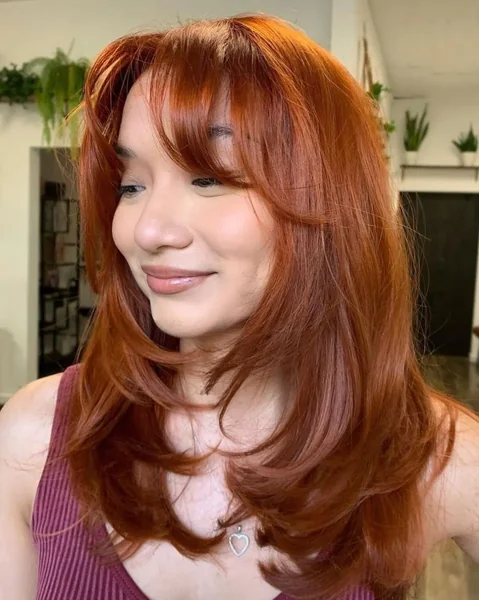
Warm copper color and long feathered layers pull attention up toward the eyes and cheekbones. The curtain bangs open at the center to create a lengthening V shape around the face. This works well on medium to thick hair that needs movement without losing length.
4. Medium Layers with Side Bangs
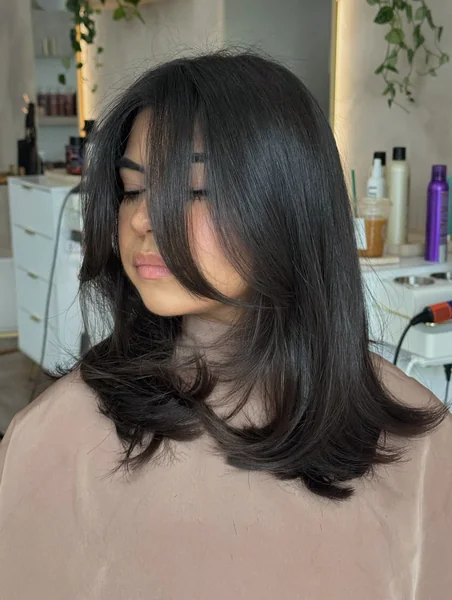
Collarbone-length layers with flicked-out ends add width below the jaw, which helps balance a fuller chin. A long side-swept bang cuts across the forehead and angles down the face for a slimming diagonal line. Use a round brush on the ends to keep the flick light and bouncy.
5. Flicked Medium Layers with Curtain Bangs
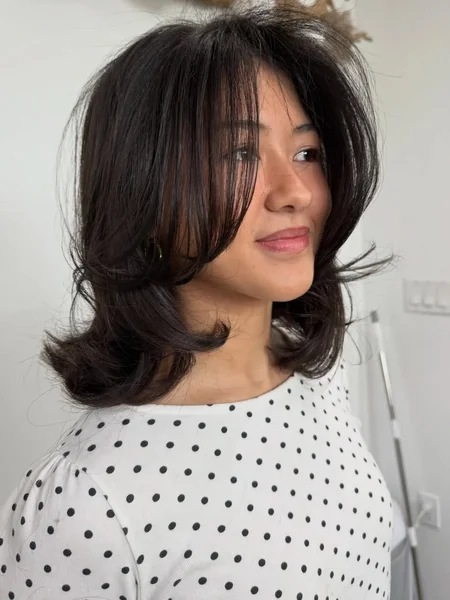
Shoulder-length layers with flipped ends create volume at the bottom of the cut, away from the chin. Curtain bangs blend into the side layers and frame the face softly. A good everyday option for dark, straight hair that falls flat without shape.
6. Blonde Bob with Side Part
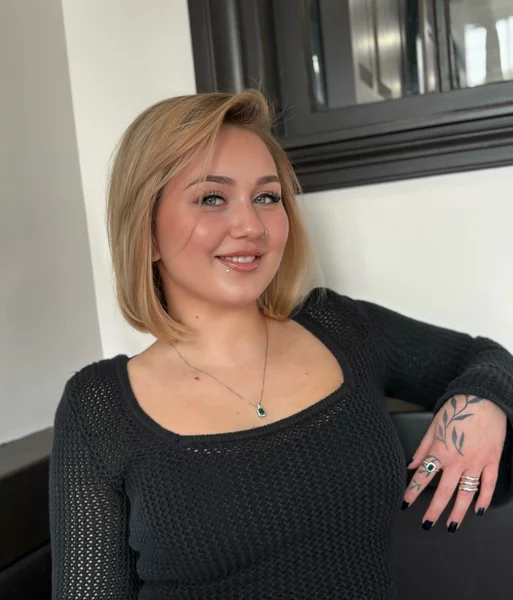
A soft side part adds height at the crown and creates an asymmetrical line that breaks up a rounder face. Keep the bob slightly longer in front, ending just below the chin, so the hair does not stop right at the widest point. Light blonde tones add brightness and a touch of lift.
7. Dark Long Layers with Curtain Bangs
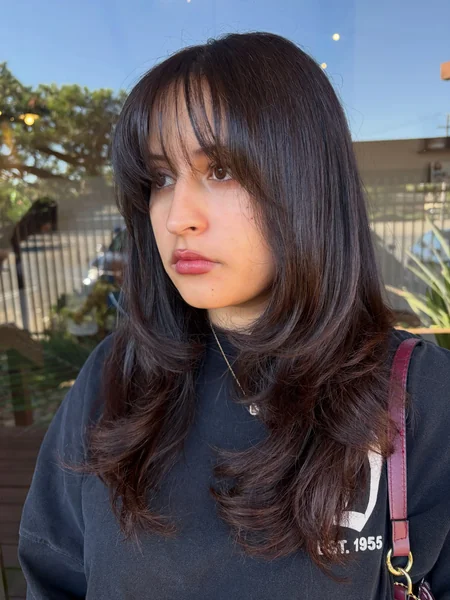
Glossy dark layers with a subtle red tint add depth and movement through the lengths. The curtain bangs sweep away from the center and slim the face from the cheekbones down. Long layers like these suit thick hair that can feel heavy when worn all one length.
8. Highlighted Long Layers with Wispy Bangs
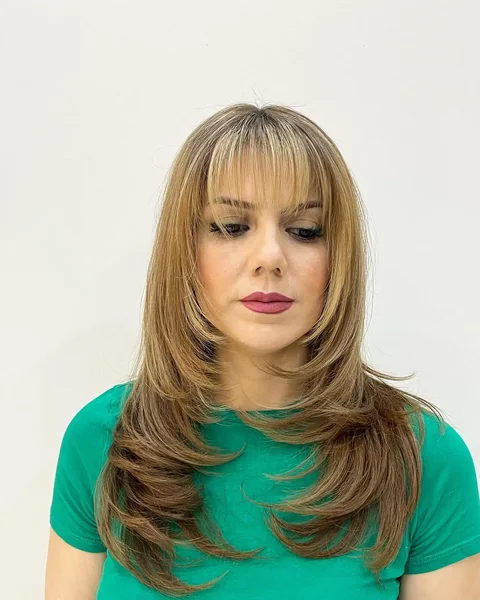
Golden highlights and long layers add light and dimension, which draws the eye away from the jawline. Wispy bangs soften the forehead without adding bulk to the face. A flattering, easy-to-wear choice for women over 40 who want length with some shape.
9. Short Stacked Bob with Side Bang
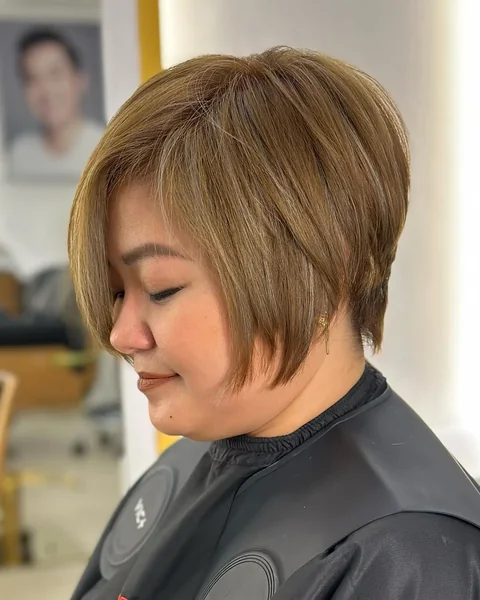
A stacked back lifts the crown and gives the cut height, which makes the face look longer and more balanced. The side-swept bang angles across the forehead, and the sides sit just above the chin. Best for women with a short neck who prefer a neat, low-effort cut.
10. Soft Wavy Lob in Ash Blonde
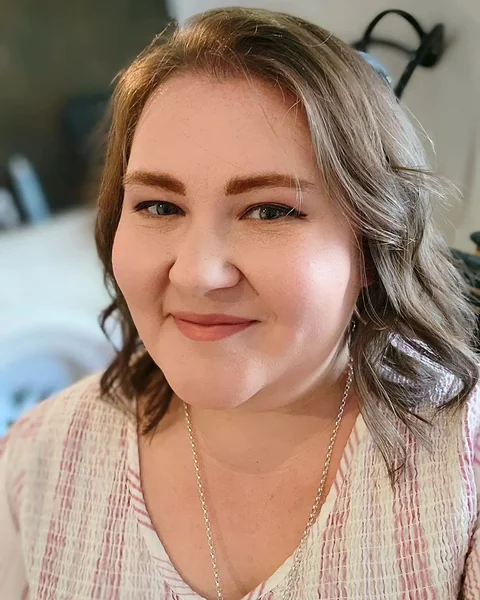
Loose waves ending a little below the chin add width at the bottom of the cut and soften the jawline. Ash and gray-blonde tones look polished and suit women over 50. Style with a large-barrel curling iron and brush the waves out for a relaxed finish.
11. Curly Shoulder-Length Cut
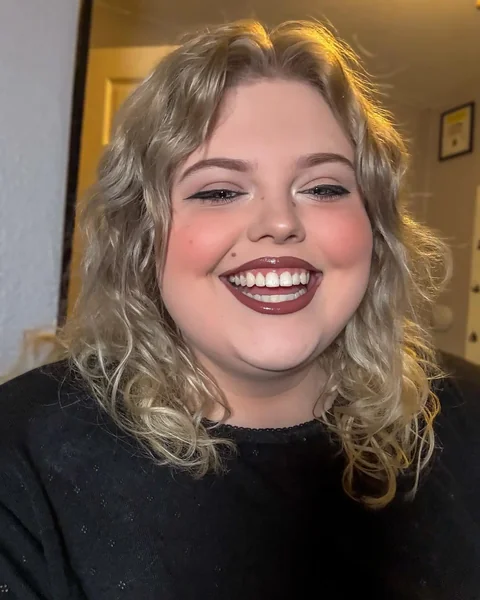
Loose curls that fall to the shoulders add volume and shape without sitting tightly around the chin. Keeping the length below the jaw lets the curls frame the face instead of widening it. Use a diffuser and a light curl cream to keep the curls defined and the crown full.
12. Straight Lob with Center Part and Glasses
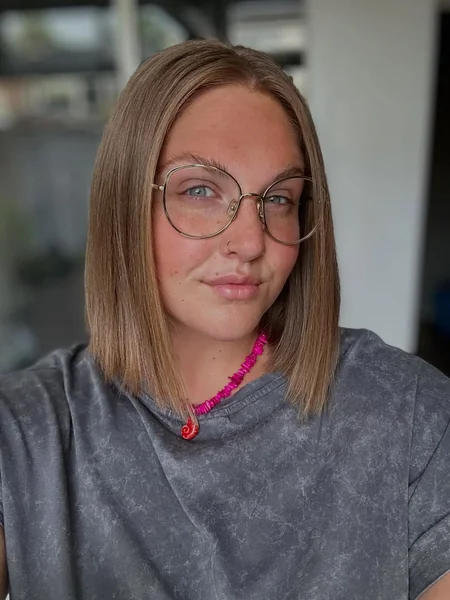
A collarbone-length lob with sleek, straight sides creates long vertical lines that slim the lower face. The center part works well with glasses, since the frames add definition at eye level. Keep the ends blunt but slightly longer than the chin for the best balance.
