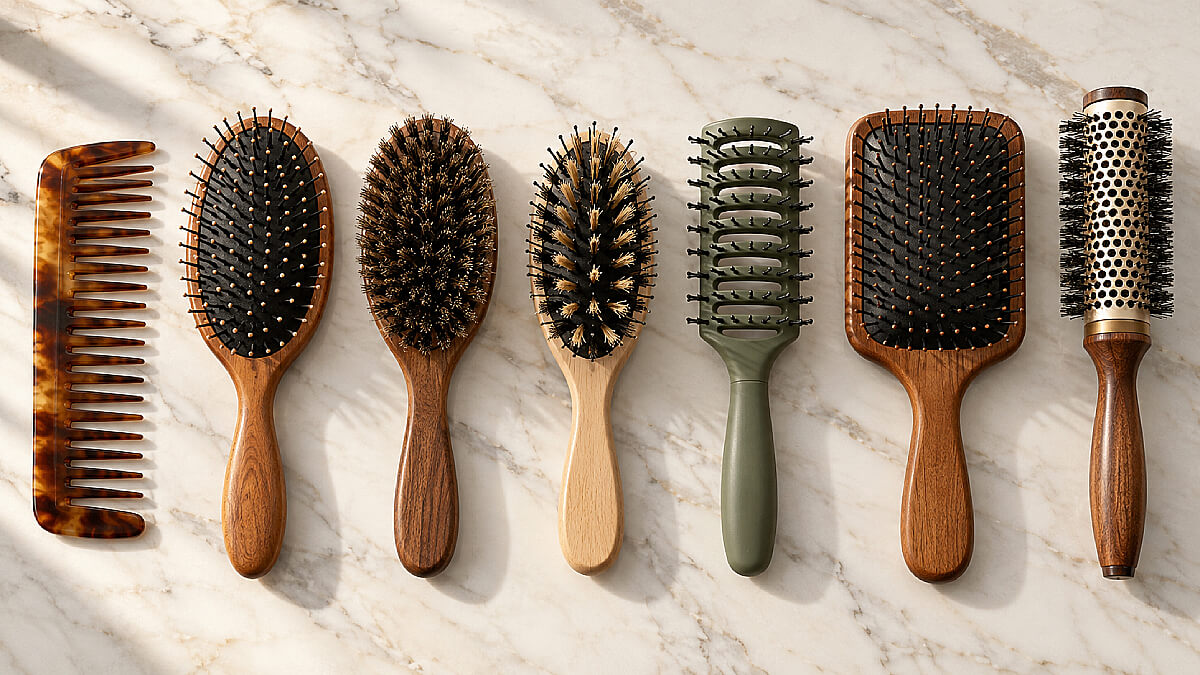
“I’ve been using the same drugstore paddle brush for probably fifteen years and my stylist recently told me I should switch, but she didn’t explain why or what to get instead. My hair is fine, color-treated, and gets frizzy in humidity. I’m completely overwhelmed by all the options. Where do I even start?”
Audrey Kessler, Portsmouth, New Hampshire
Audrey, you are not alone in this. Honestly, the hairbrush aisle is one of those places where even people who work in salons can feel their eyes glaze over a little. There are boar bristle brushes and nylon brushes and mixed bristle brushes and vented brushes and round brushes in about forty different barrel sizes, and none of the packaging really explains what you’re supposed to do with any of it. The whole category feels deliberately confusing, like it was designed that way.
The right brush depends on your texture, density, length, and whether you are detangling or styling. Fine hair versus coarse hair behaves completely differently in a brush. Color-treated hair has different needs than virgin hair. Someone who air dries is not going to need the same tools as someone who blowouts every morning. So instead of giving you one universal answer, I want to walk you through the options in a way that actually makes sense for your real life and your actual hair.
This post may contain affiliate links, meaning I may earn a small commission at no extra cost to you. I only share products I truly believe in. As an Amazon Associate, I earn from qualifying purchases. Your support helps me continue creating free content like this.
1. The Wide-Tooth Comb (Yes, It Counts, and You Probably Need One)
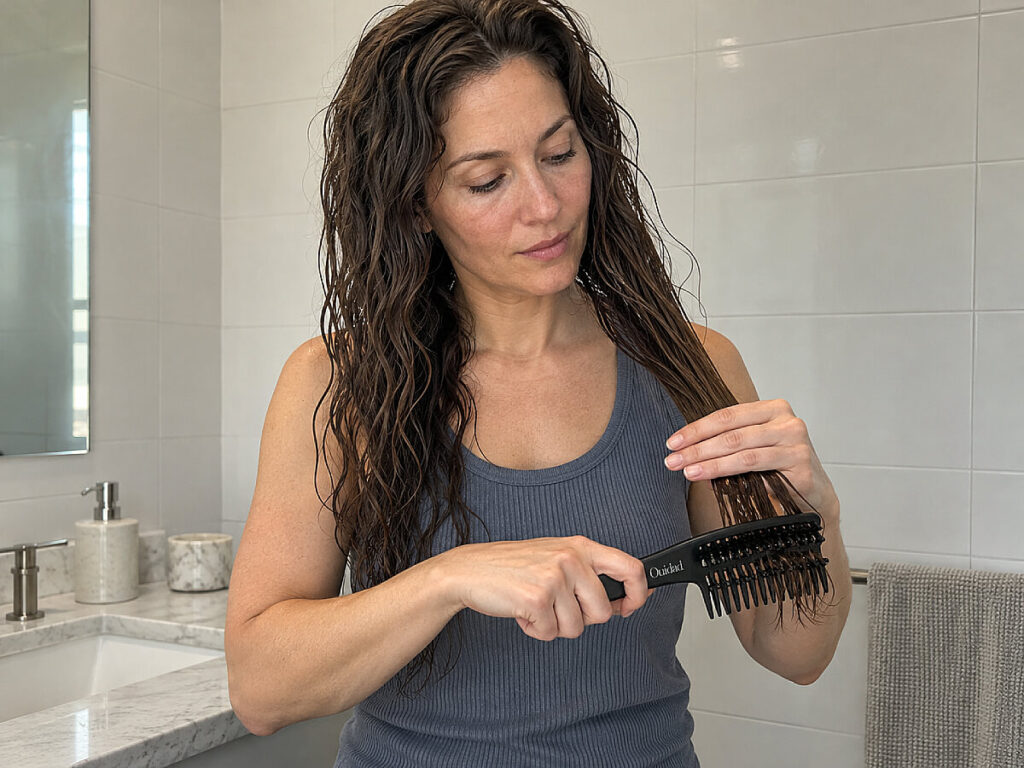
Before we even get into brushes specifically, I want to talk about wet hair for a second, because this is where so many women are quietly doing damage without realizing it. When your hair is wet, the cuticle is lifted and the strand is at its most fragile. Dragging a brush through wet hair, especially fine or color-treated hair like Audrey’s, causes breakage, and the breakage is cumulative. You don’t notice it happening. You just slowly end up with thinner ends and more frizz over time, and you blame aging or the humidity or your shampoo.
A wide-tooth comb used on soaking wet hair, starting from the ends and working your way up, is genuinely one of the most protective things you can do for your hair. I keep a wide-tooth comb in my shower and it has made a noticeable difference in the condition of my ends over the years. The Ouidad Double Detangler is one I like for curlier textures, but honestly any wide-tooth comb with smooth, rounded teeth will do the job. The key is patience, detangling gently without forcing through knots, which sounds obvious but feels counterintuitive when you’re standing in the shower trying to get on with your day.
If you absolutely must use a brush on wet hair, a Wet Brush with those flexible IntelliFlex bristles is genuinely one of the more thoughtful designs on the market for that purpose. The bristles give way instead of dragging. But for fine, color-treated hair, I’d still opt for the comb first.
2. The Cushion Brush for Everyday Dry Brushing and Scalp Circulation
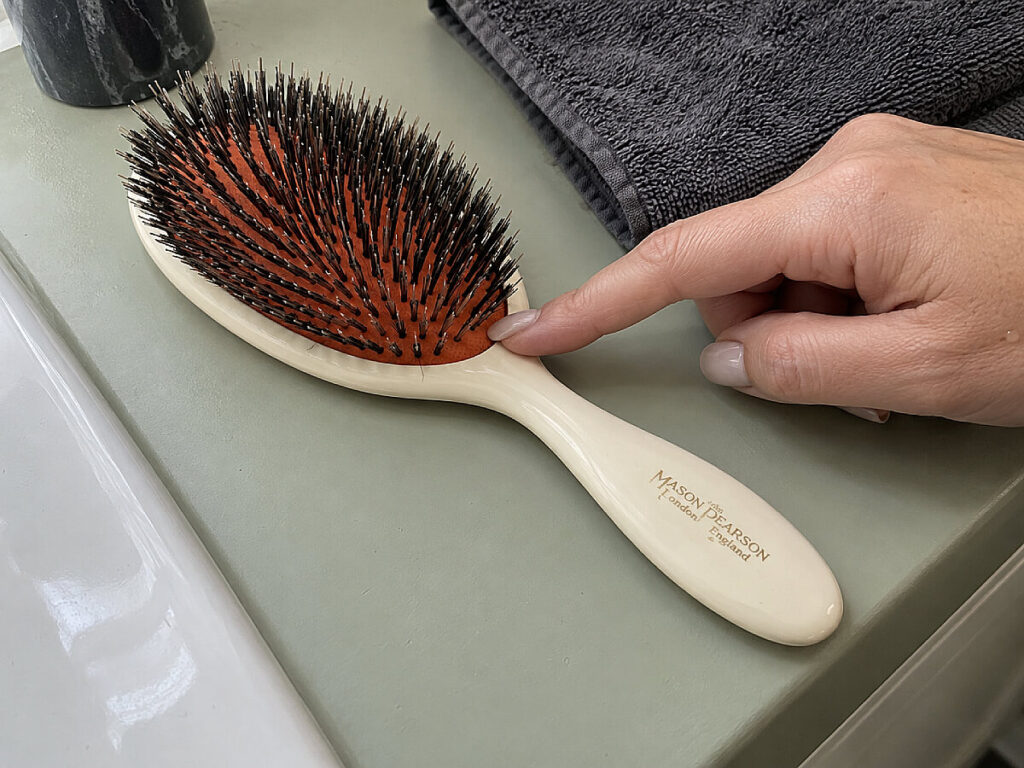
Okay so once your hair is dry, or mostly dry, this is where a good cushion brush earns its place on your bathroom counter. A cushion brush has that soft, air-filled base that gives when you press it against your scalp, which makes it so much more comfortable than a hard-backed brush, and also means the bristles flex rather than scrape. This makes it really appropriate for everyday use, for smoothing dry hair, distributing natural oils from your scalp down through the mid-lengths, and just general grooming.
The thing I love about a cushion brush is that it works on almost everyone. Fine hair, medium hair, wavy hair that’s been air dried, all of it responds well to a cushion brush for daily detangling and smoothing. The Mason Pearson is the one that gets talked about constantly, and the praise is genuinely deserved. It is expensive, I’m not going to pretend otherwise, but the construction is exceptional and the brush lasts for decades if you clean it regularly. I have one that is nearly twenty years old. The bristles still feel the same as they did when I bought it.
If the price is a hard stop for you, the Denman D3 brush is a much more accessible option that performs well, and it’s especially nice for medium to thick hair. The nylon pins are gentle and the cushion base holds up. It won’t last twenty years, but it’ll give you several good ones. For fine, color-treated hair like Audrey is describing, I’d actually lean toward the Mason Pearson Sensitive if budget allows, because the softer bristles are kinder on fragile strands.
3. The Boar Bristle Brush for Shine and Frizz Control
Here’s where I get a little opinionated, which if you know me at all is not surprising. Boar bristle brushes are one of those things that get over-complicated in the beauty press, and I want to just cut through that a little. The reason they’re worth using, particularly on dry, finished hair, is that the natural bristles pick up sebum from your scalp and redistribute it down the hair shaft, which adds shine without you having to spray anything on. They also smooth the cuticle as you brush, which physically reduces frizz. No product required.
For Audrey specifically, with fine color-treated hair that gets frizzy in humidity, a 100% boar bristle brush used on dry hair is something I’d actually recommend she add to her routine. Not for detangling, not for blow drying, just for a few passes of finishing on dry hair to smooth things down and add some life to the shine. The Denman boar bristle brush is solid, and so is the Goody boar bristle paddle if you want something widely available and affordable.
One thing I’ll mention because nobody on packaging ever does: boar bristle brushes are not great for thick or very coarse hair used alone, because the bristles can’t really get through. For thicker hair, you want a mixed bristle brush, which has boar bristles interspersed with nylon pins, and I’ll get to that shortly. But for fine to medium hair, a pure boar bristle brush for daily finishing is one of those genuinely useful things that costs almost nothing if you buy a decent mid-range option.
4. The Mixed Bristle Brush for Medium to Coarse Hair That Wants Both Smoothing and Control
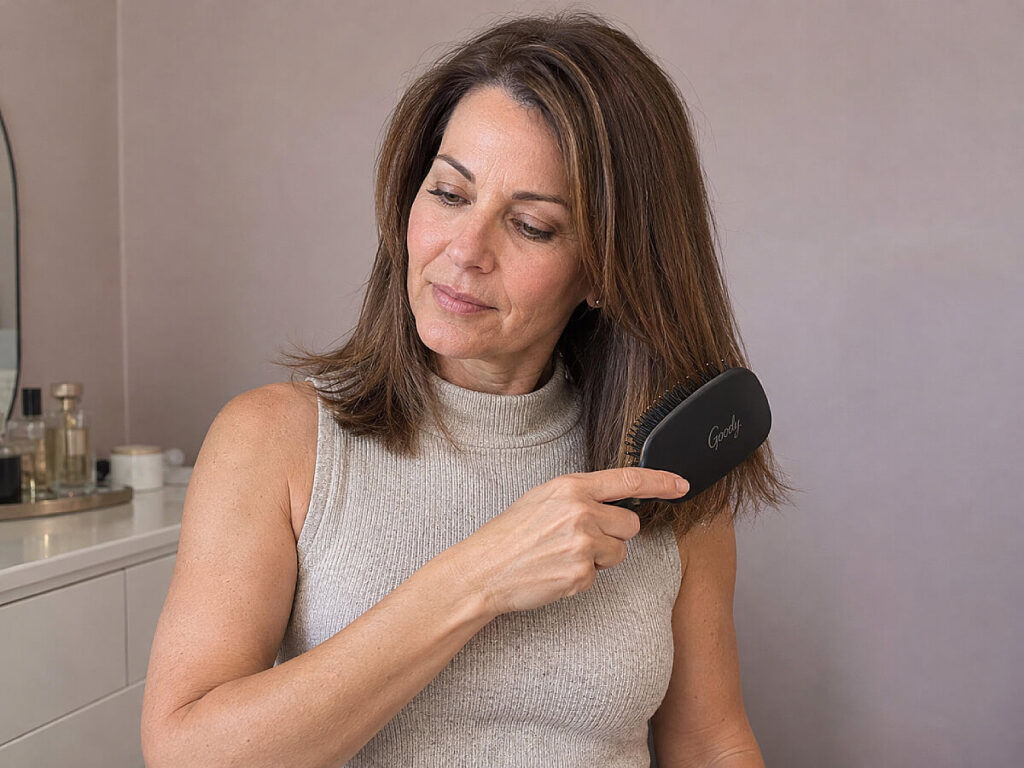
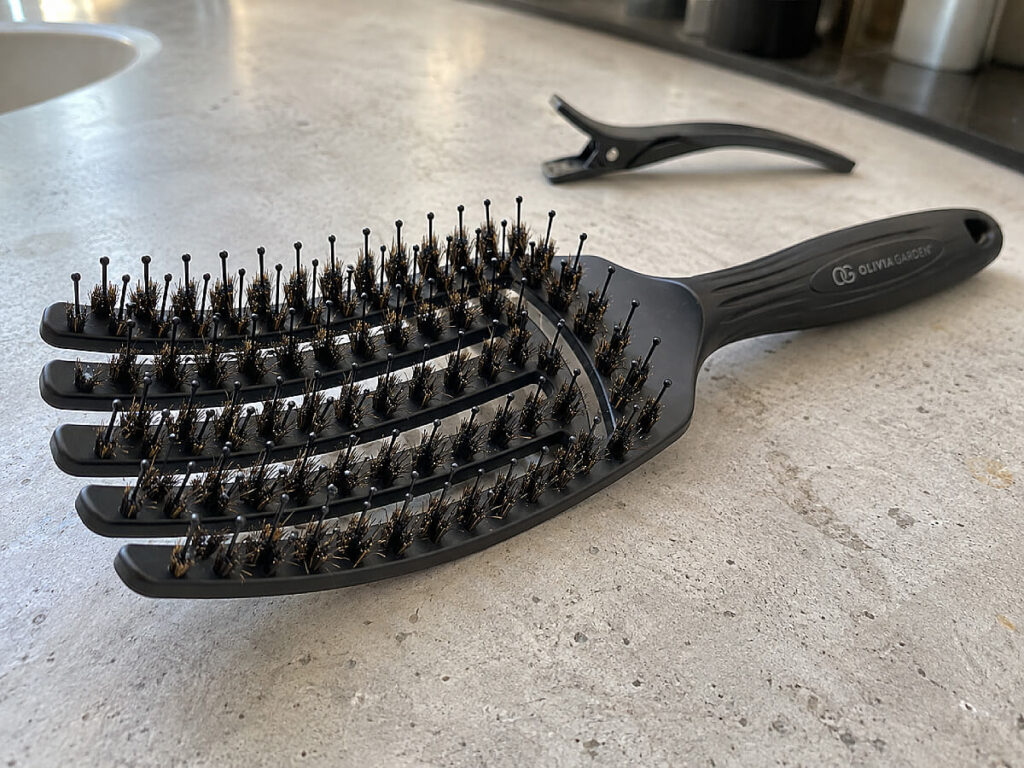
So the mixed bristle brush is exactly what it sounds like, boar bristles and nylon pins combined in one brush, and the reason this matters is that the nylon pins help penetrate thicker, denser hair while the boar bristles smooth the cuticle as you work through. It’s the best of both approaches if your hair is on the thicker or coarser side and you want shine and frizz control but a pure boar bristle brush just skates over the top without actually doing anything.
A mixed-bristle brush can be an option for smoothing the surface of a blunt bob. Choose a brush that moves through your texture comfortably, and avoid forcing it through tangles in pursuit of shine.
The Olivia Garden Finger Brush in a mixed bristle version is one I like for this, and so is the Cricket Static Free brush which is reasonably priced and genuinely reduces static, which is a real consideration in dry climates or winter. If you have medium density hair that’s somewhere between fine and thick, this is probably the category you want to be shopping in.
5. The Vented Brush for Speeding Up Your Blow Dry Without Frying Your Hair
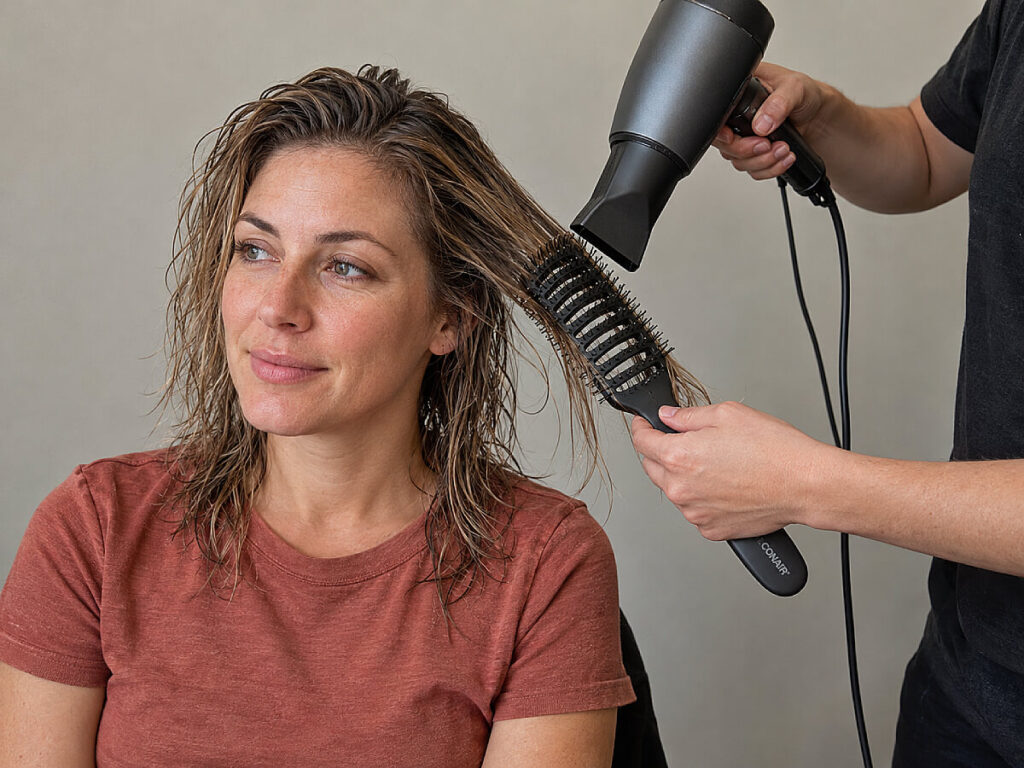
If you’re someone who blow dries their hair, a vented brush is worth understanding, because most women are either not using one or using one incorrectly and then wondering why their blow dry takes forever. The vents in the brush allow airflow through the bristles and directly to the hair, which means the hot air from your dryer is actually reaching the hair strand rather than just hitting the back of the brush. It speeds up drying time and reduces the amount of heat exposure your hair needs overall.
I use a vented brush in the first phase of a blow dry when the hair is still pretty wet and I’m mostly just trying to remove moisture. Once the hair is about 80% dry I’ll switch to a round brush or a paddle depending on what I’m trying to achieve. Using a vented brush on soaking wet hair and moving through it quickly is actually a lot gentler than going straight in with a round brush and high heat. It reduces that stretch-and-heat combination that causes so much of the damage people blame on blow drying in general.
The Conair vented brush is perfectly fine for this and costs almost nothing. The Spornette vented brush is a step up and holds up better over time. If your morning routine involves a dryer and you’re not already using a vented brush for that first rough-dry stage, this is a genuinely easy and inexpensive change that might actually shorten your morning by ten minutes.
6. The Paddle Brush for Long, Straight, or Wavy Hair You’re Blowing Out Smooth
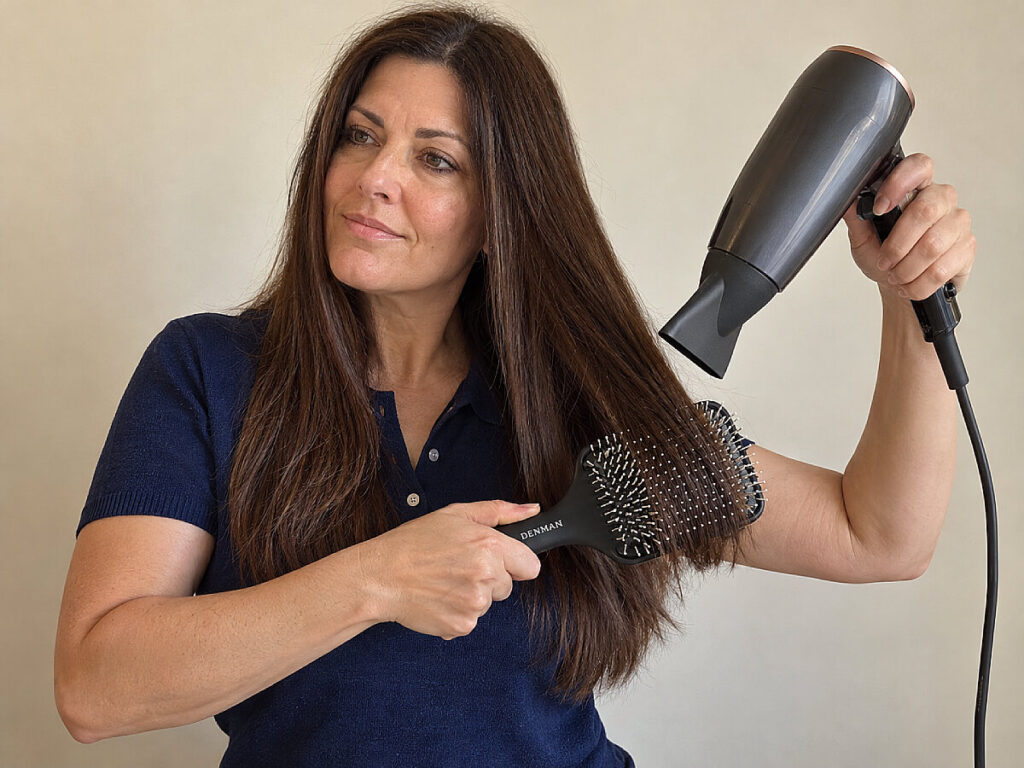
Here’s the thing about Audrey’s paddle brush situation. The paddle brush itself is not a bad tool. The problem is probably that she’s been using it for everything, wet and dry, morning and evening, regardless of what her hair actually needs in that moment. A paddle brush used correctly on the right hair type is actually one of my favorite tools in the kit. It covers a lot of surface area at once, which makes it efficient for longer hair, and it creates that smooth, straight finish without a lot of effort.
Where a paddle brush really performs is during a blow dry on medium to long hair that you want to wear straight or gently waved. You section the hair, hold the paddle flat against the section, and follow it with the dryer nozzle pointed down the shaft, which smooths the cuticle as you dry. The result is that sleek, polished finish that looks like you put in real effort even if it only took fifteen minutes. For fine hair specifically, I’d choose a paddle brush with a mix of nylon and boar bristles rather than a pure nylon paddle, because it’ll give you that finish without creating static or causing the flyaways that pure nylon tends to produce on fine strands.
The Denman paddle brush is one I keep coming back to. The Wet Brush Paddle Detangler is great for fine hair specifically because the flexible bristles are so much gentler. If budget isn’t a concern, the Mason Pearson large paddle with mixed bristles is really in a category of its own for this kind of work. But honestly, a mid-range option from any of the major professional brands will get you there.
7. The Round Brush: The Most Powerful Styling Tool You’re Probably Not Using Right
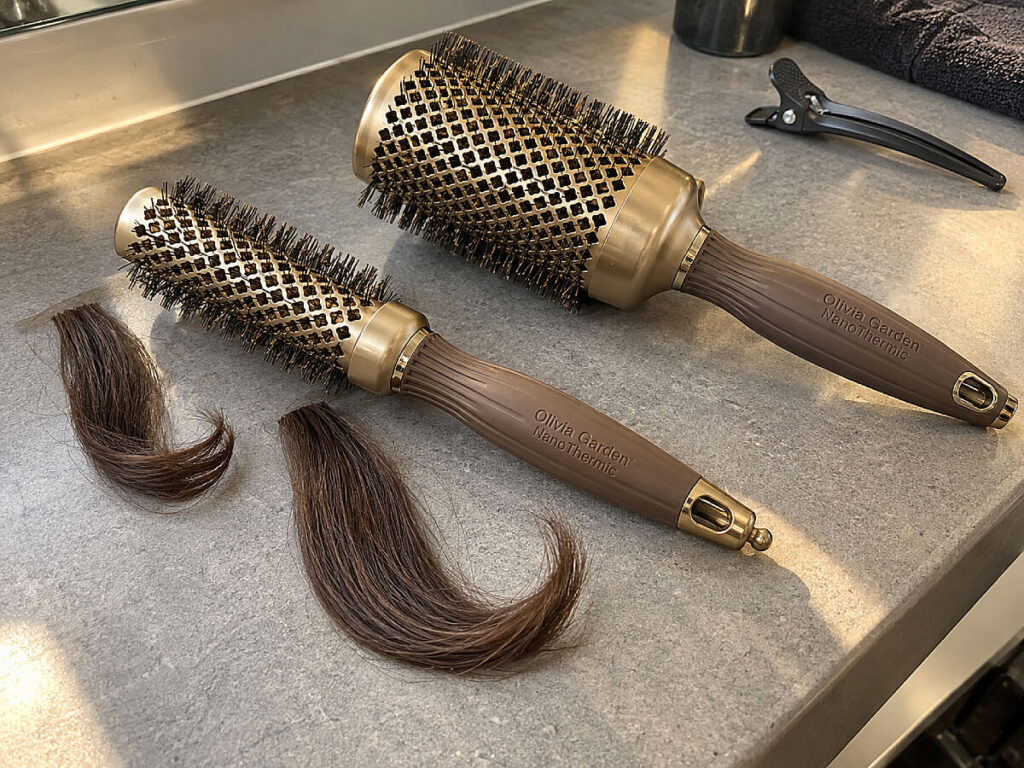
If I had to pick the one brush that makes the biggest difference in how a blowout looks when it’s finished, it’s the round brush, and I say that knowing it’s also the one that intimidates people the most. A round brush can tangle when sections are too large or the hair is too wet. The round brush rewards patience and small sections, and once you get the feel for it, it genuinely transforms what your hair can look like coming out of a blow dry.
The barrel size matters a lot and I think it’s underexplained everywhere. A smaller barrel, something in the 1 to 1.5 inch range, creates more curl and bend, so it’s what you want if you’re adding volume at the roots, curling the ends under, or working with shorter hair like a bob or lob. A larger barrel, 2 inches and up, creates that gentle wave or soft bend and is more appropriate for longer hair where you’re mostly after smoothness with a little movement. The barrel size changes the shape and lift you can create.
For fine hair, I love a round brush with a mix of boar and nylon bristles because it grips the hair without being aggressive. The Drybar Double Shot brush has a cult following for a reason, and it’s well-suited to fine to medium hair. Ibiza makes round brushes in several sizes for different styling goals. The ceramic barrel holds heat without getting dangerously hot, and the mixed bristles create a beautiful finish. For coarser or thicker hair, the Olivia Garden Nano Thermic is worth every penny because the thermal ceramic technology actually helps hair dry faster and smoother simultaneously.
The technique that changed everything for me when I was first learning was working in sections no wider than the brush itself, always, no matter how impatient I felt. And keeping the dryer nozzle pointed down the hair shaft rather than blasting from the side. Those two things alone will take you from a tangled mess to something that actually looks intentional. Roll the ends around the barrel for about ten seconds after you’ve dried that section, let it cool for a moment before releasing, and you’ll get that bend that holds through the day.
So What Should Audrey Actually Buy?
Based on everything she described, fine, color-treated, frizz-prone hair, I’d tell her to start with three things. A wide-tooth comb for when her hair is wet, a cushion brush with soft boar or mixed bristles for daily dry brushing and finishing, and a round brush in a 1.5 to 2 inch barrel for blow drying. That paddle brush she’s been using for fifteen years can stay in the drawer for the occasional long smoothing session, but it shouldn’t be her everyday go-to for everything anymore.
The bigger picture here is really that there’s no single brush that does all the things, and that’s okay once you understand what each one is actually for. I know it feels like one more thing to keep track of, but once you match the right tool to the right situation your hair will genuinely behave better with less effort, and that’s the whole point. You shouldn’t have to fight your hair every morning. With the right brush in your hand for what you’re actually trying to do, it gets a lot easier.
If you only invest in one thing after reading this, make it a good boar or mixed bristle cushion brush for dry hair finishing. That change alone will give you more shine and less frizz than most products promise to and almost none deliver on. Start there, see how your hair responds, and go from there.