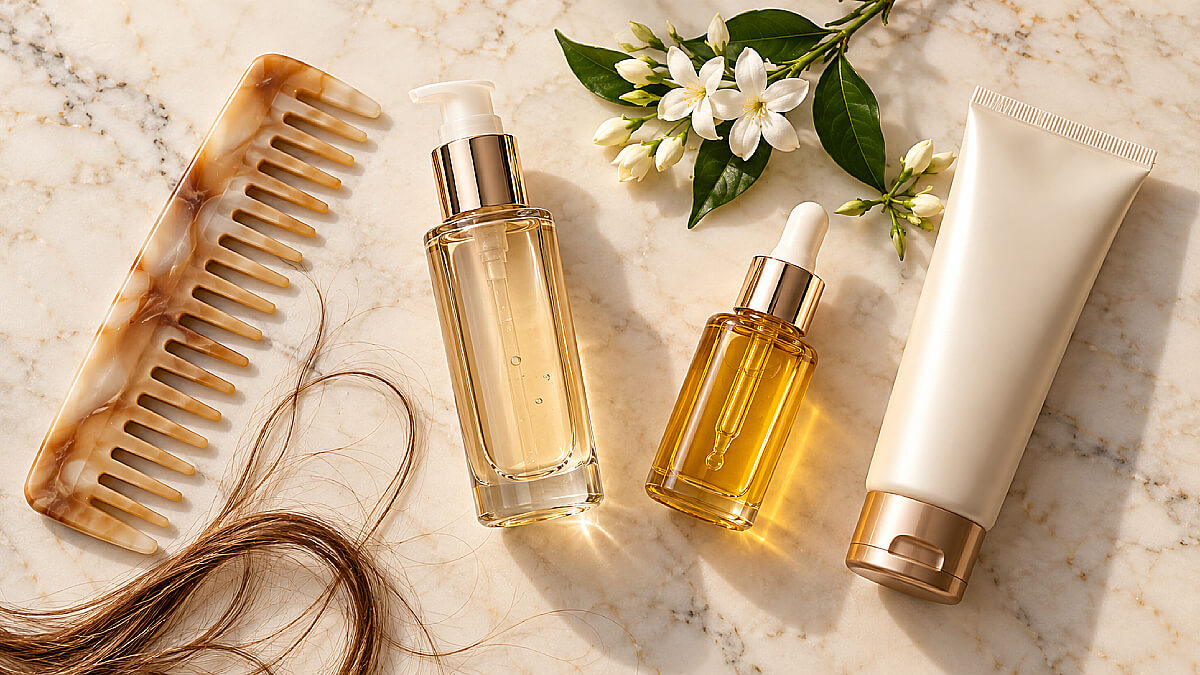
From Sandra Whitford in Asheville, North Carolina: “I’ve been using a hair oil for about two years now, thinking I was doing my hair a favor, but my ends still feel rough and my hair looks kind of greasy near the roots no matter what I do. My friend swears by her hair serum and says I should switch. Now I don’t know what to believe. Can you help me figure out which one I actually need?”
Sandra, it’s easy to see why this feels confusing, and honestly the beauty industry has done a pretty spectacular job of making these two products seem interchangeable when they are really not. Choose for your texture and styling needs rather than scent or packaging alone. The difference between a serum and an oil is not just marketing language. It changes how the product sits on your hair, what it actually does to the strand, and whether you walk out of the house looking polished or like you forgot to rinse your conditioner out.
Hair oil and serum serve different purposes, and using more of the wrong product can leave fine hair limp or coated. This guide compares how each fits into a routine so you can choose for your texture and styling goals.
This post may contain affiliate links, meaning I may earn a small commission at no extra cost to you. I only share products I truly believe in. As an Amazon Associate, I earn from qualifying purchases. Your support helps me continue creating free content like this.
First, Let’s Talk About What These Two Things Actually Are
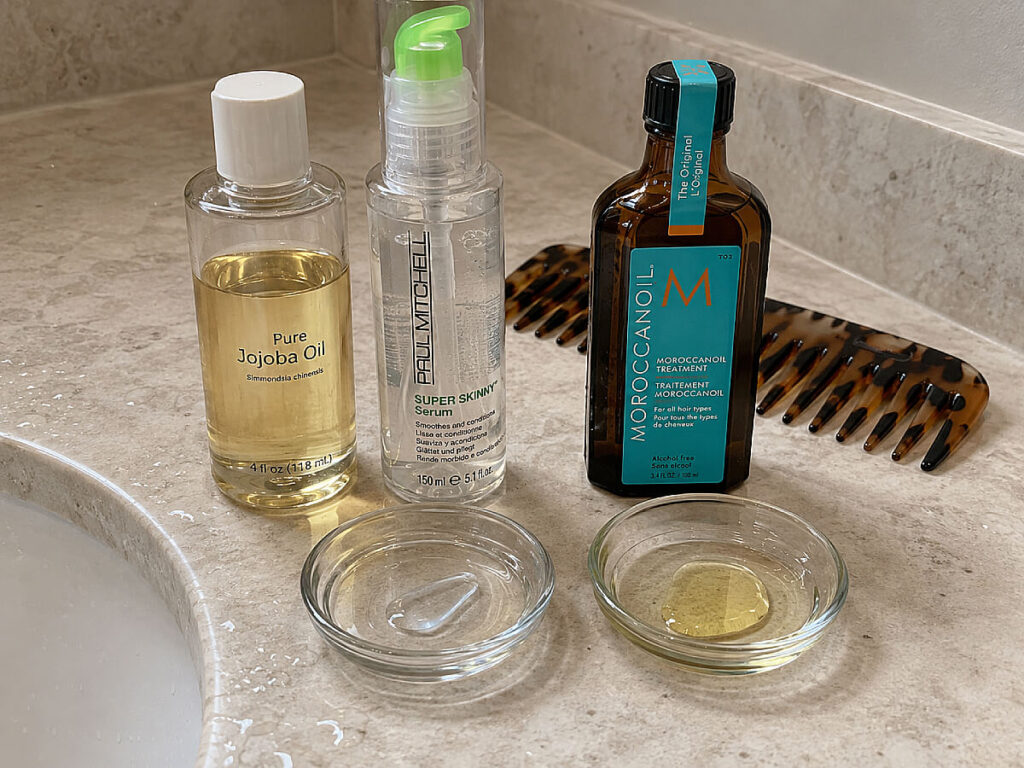
Before we even get into which one you need, it helps to understand what you’re actually putting on your hair when you reach for one of these products, because the names get thrown around so loosely that most people have no idea there’s a structural difference.
Hair oil is pretty much what it sounds like. It’s a lipid-based product, meaning it’s made primarily from plant-derived or synthetic oils, things like argan, jojoba, coconut, marula, or castor oil. These oils work by coating the outside of the hair shaft, smoothing the cuticle, reducing friction, and in some cases, if the oil molecule is small enough, actually penetrating the cortex of the strand itself. Coconut oil is one of the few that can genuinely get inside the hair, which is why it’s so good as a pre-wash treatment but can be heavy as a leave-in for finer textures. Most oils, though, sit on top of the hair and do their work there. That’s not a bad thing, it just means you have to think about how much you’re applying and where.
Hair serum, on the other hand, is a silicone-based or water-soluble polymer product, usually with a silky, almost gel-like or liquid consistency. It’s designed to coat the hair shaft in a thin, even film that reflects light, seals the cuticle temporarily, and protects against humidity and heat. Good serums often also contain ingredients like hydrolyzed proteins, panthenol, or conditioning agents that do some actual hair health work beyond just making things look shiny. The texture tends to be lighter and more uniform than oil, which is why it’s less likely to cause that weighted-down, greasy feeling when applied correctly.
Here’s where the overlap happens and why people get confused: a lot of products on the market are marketed as “hair oil” but are actually silicone-heavy serums with a bit of oil blended in, and vice versa. Moroccanoil Treatment is a classic example of this, it’s called an oil, it has argan oil in it, but the primary ingredients are cyclopentasiloxane and dimethicone, which are silicones. So technically it performs more like a serum. That’s why some people with fine hair who were told to avoid oils use it just fine, because it’s not really behaving like a pure oil.
1. You Have Fine or Low-Density Hair
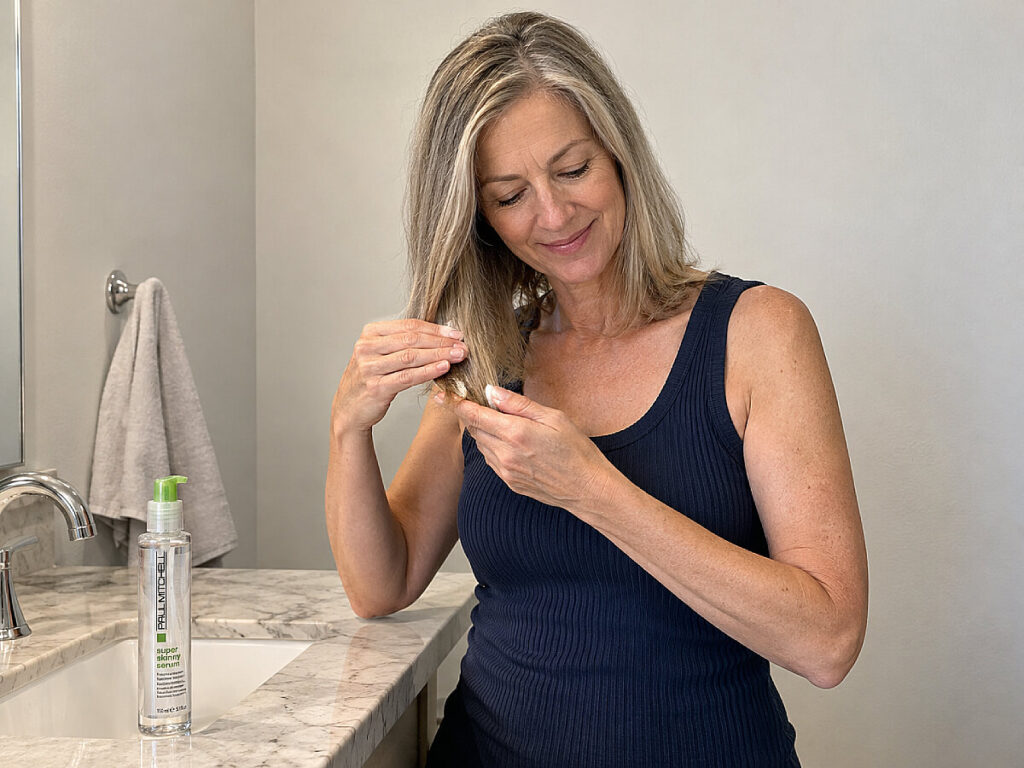
If your hair is fine, and I mean actually fine in strand diameter, not just thin on your head, serum is almost always going to serve you better than a traditional oil. Fine hair has a smaller surface area per strand, which sounds like a technicality but in practice means that oils have fewer places to go and tend to congregate, making individual strands look greasy and limp faster than you’d expect even with a small amount of product.
What works so much better is a lightweight, water-based serum that can spread evenly and give you the smoothness and shine you’re after without the weight. I really like Kenra Platinum Silkening Mist for fine hair, it applies almost like a spray and dries down to essentially nothing in terms of feel while still giving the hair a smooth, healthy appearance. Paul Mitchell Super Skinny Serum is another one I’ve recommended for years, it’s not glamorous or fancy but it genuinely does what it says.
The application matters as much as the product here. For fine hair, you want to work serum through the mid-lengths and ends only, keeping it entirely away from the root area. Warm a tiny amount between your palms before you even think about touching your hair, and use less than you think you need. I’m talking about a dime-sized amount for shoulder-length hair, and even that might be too much on a really fine texture. A lot of the women I see who are unhappy with how their fine hair behaves with any styling product are simply using way more than necessary, and no product can rescue you from that.
2. Your Hair Is Dry, Coarse, or Has a Lot of Texture
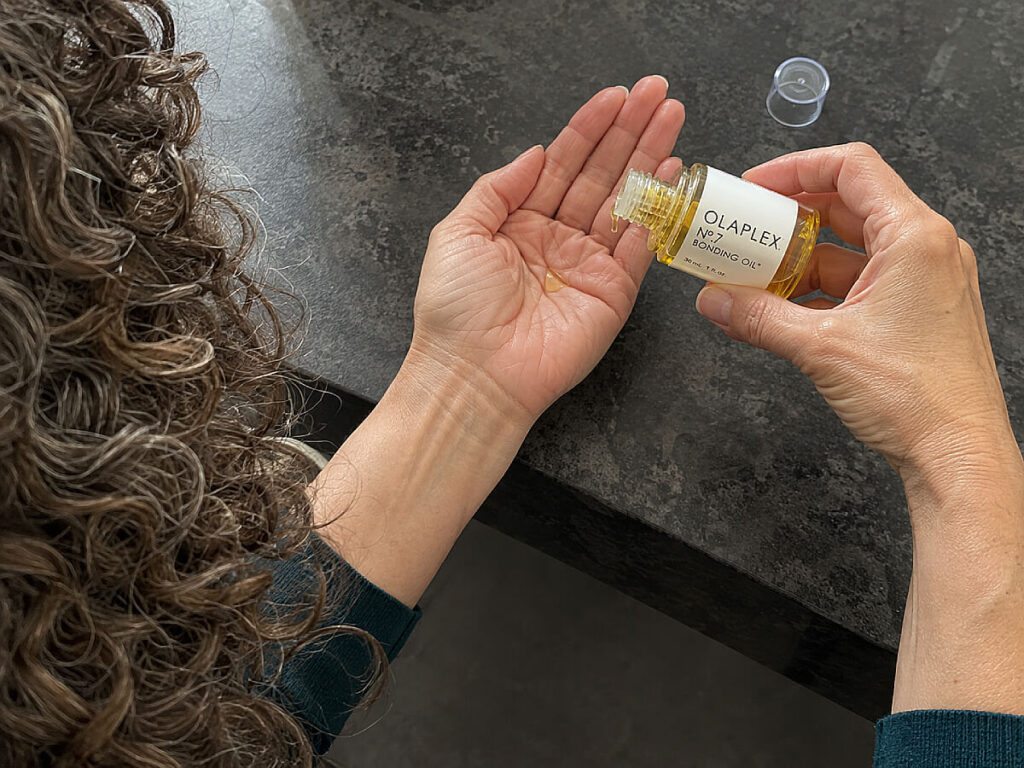
This is where oils really shine, and I mean that without any hedging. Coarse, dry, or highly textured hair genuinely drinks oil. The cuticle on coarser strands tends to be more raised and irregular, which is why these hair types lose moisture faster, feel rougher to the touch, and are prone to frizz and breakage. Coating that cuticle with a heavier, lipid-rich oil helps seal moisture in, smooth the surface, and reduce the kind of friction that leads to split ends and tangles.
For thick, coarse, or natural hair textures, I love Olaplex No. 7 Bonding Oil because it does double duty, it has the oil benefits but also contains the bond-building technology that helps strengthen compromised hair. For a pure, no-frills option, Jamaican Black Castor Oil used as a weekly scalp and length treatment has been a staple in textured hair care for decades for good reason. It’s thick, it’s rich, and for the hair types that need it, it’s genuinely nourishing in a way that a serum just can’t replicate.
One thing I want to note here, because I think it gets overlooked, is that even within the “dry and coarse” category there’s a spectrum. If your hair is coarse but you live somewhere very humid, you might actually want to layer, using a light oil as your base treatment and then a frizz-control serum over the top before you style. That combination approach is something I use on my own hair in summer, my ends get the nourishment they need and the serum on top acts as a barrier against the humidity that would otherwise undo everything.
3. You’re Dealing With Color-Treated or Chemically Processed Hair
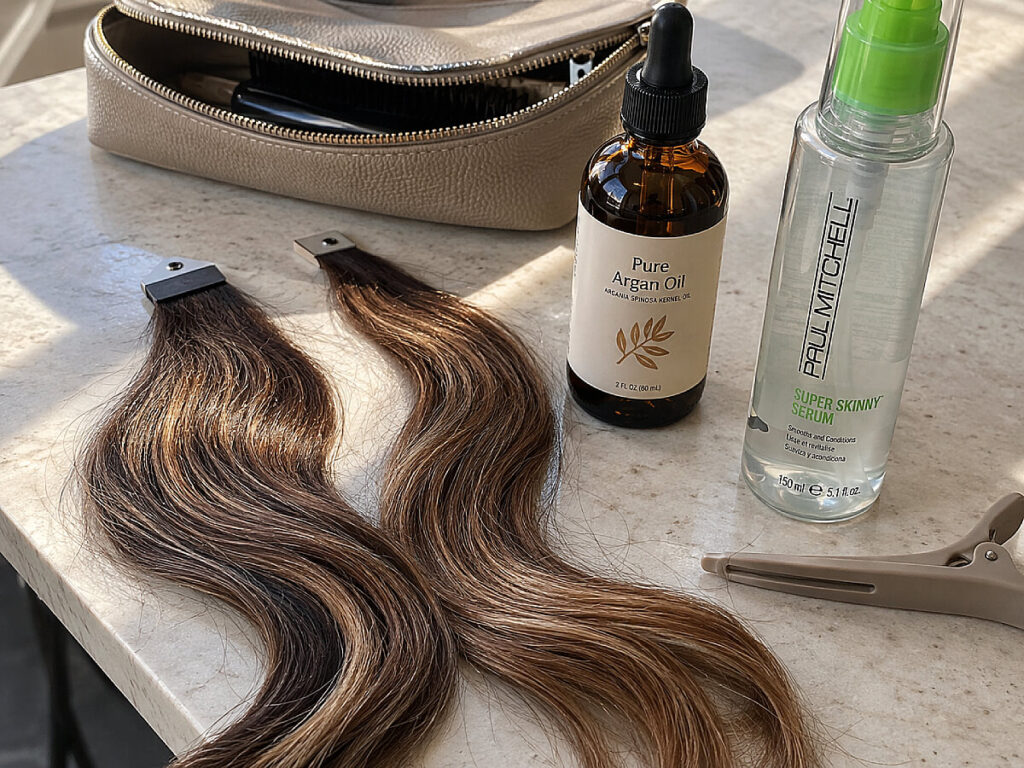
Color-treated hair is its own universe of needs, and the serum versus oil question gets a little more layered here. Chemical processes, whether we’re talking permanent color, highlights, keratin treatments, or relaxers, alter the structure of the hair shaft itself. The cuticle is lifted and sometimes roughened during these processes, and the cortex is changed at a molecular level. This is why color-treated hair tends to feel drier, more porous, and more fragile than your natural hair did before.
My honest opinion, having worked on color-treated hair almost every single day for the past fifteen years, is that most color-treated hair benefits from both a serum and an oil used at different points in the routine rather than choosing just one. I’ll often recommend a light penetrating oil, something like pure argan oil or marula oil, used as a pre-shampoo treatment once a week to help replenish what the cuticle has lost, and then a serum used after styling to seal everything in and protect the color vibrancy by minimizing porosity. Porous hair is why color fades faster, it literally leaks pigment, and a serum creates a physical barrier that slows that process down somewhat.
Where I see people go wrong with color-treated hair is reaching for the heaviest, richest oil they can find thinking more moisture means more repair, but applying something like a thick castor or coconut oil as a leave-in on fine color-treated hair is going to create a buildup situation that actually makes the hair look dull and limp. Lighter oils like squalane are a much better fit for fine or medium colored hair because they absorb more readily and don’t sit on top the same way.
4. Frizz Is Your Main Complaint
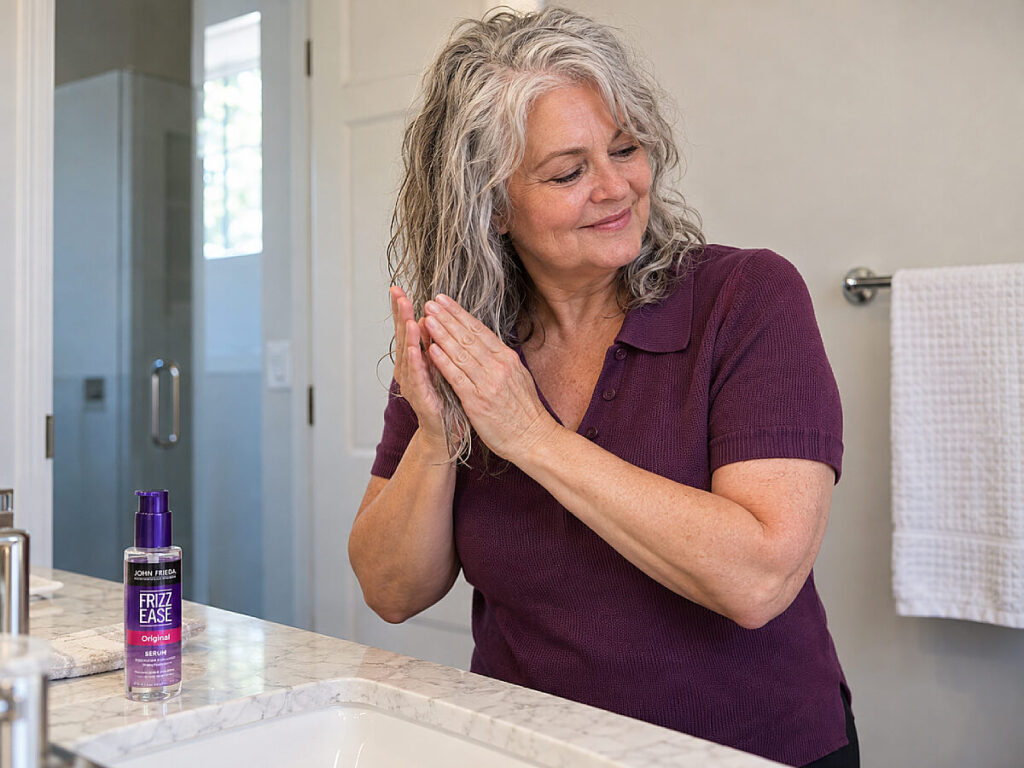
Frizz deserves its own category because it’s such a specific problem with a specific solution, and choosing between a serum and an oil for frizz control is actually one of the clearest-cut decisions in this whole conversation. If frizz is your main concern, consider both dryness and humidity when choosing a product.
Humidity-driven frizz, the kind where you style your hair perfectly inside and then walk out the door and it puffs up, that’s a serum situation. The silicone or polymer film that a serum creates on the hair shaft acts as a physical seal against environmental moisture, which is exactly what you need. John Frieda Frizz Ease Original Serum is honestly one of the workhorses of this category and I’m not embarrassed to recommend it even though it’s a drugstore product. It works. Ouai’s Hair Serum is another one that performs beautifully in humidity and smells incredible, which doesn’t hurt.
Frizz that comes from dryness and damage, where the hair itself is rough and brittle and sticks out because the cuticle is so ragged, responds better to oil because you’re actually addressing the underlying texture of the strand. But here’s the thing, if you apply only oil and go out into a humid day, you may actually end up with both problems, the frizz from dryness is slightly better but now you’re also getting atmospheric moisture swelling the hair. That layering approach I mentioned earlier really does pay off here, oil on dry or damaged sections, serum over the top to seal. It sounds like more steps but it takes about forty-five seconds.
5. You’re Trying to Protect Your Hair From Heat Styling
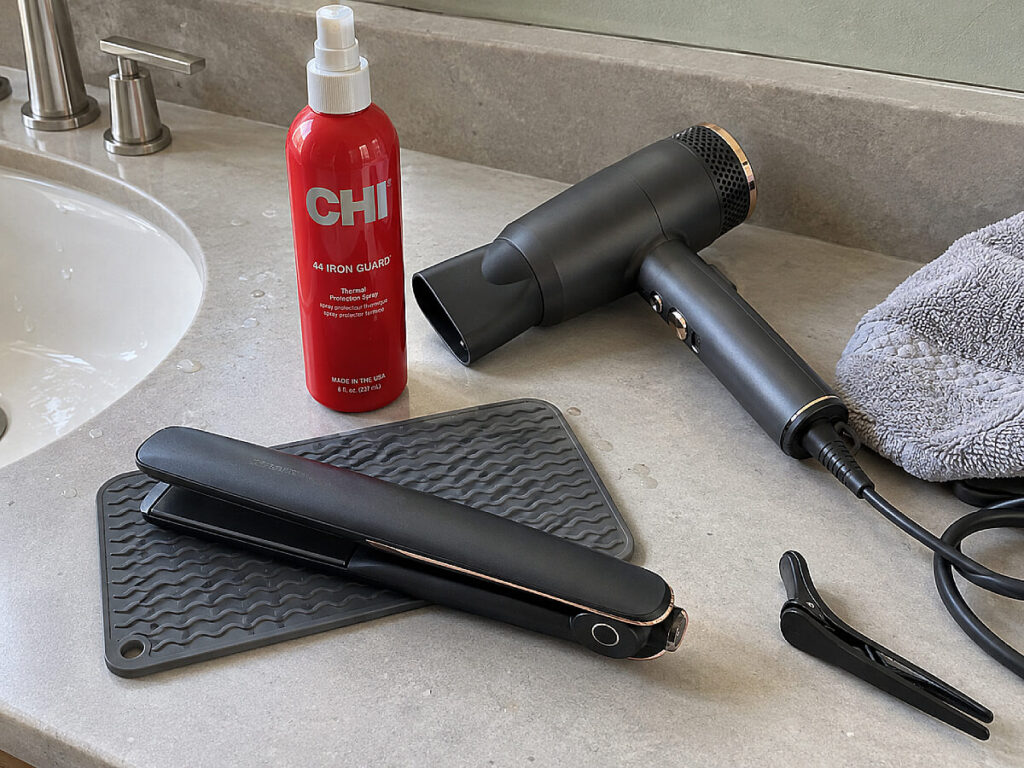
Heat protection is an area where I have a fairly strong opinion that sometimes surprises people. A lot of women reach for an oil before blow-drying or flat-ironing because they’ve heard that oils protect from heat, and while some oils do have a degree of thermal protection, most standard hair oils do not offer anything close to the level of protection you need if you’re regularly using tools above 350 degrees. Applying a straight-up botanical oil before high heat is actually something I’d caution against because some oils, especially coconut oil, can reach their smoke point and essentially fry at high temperatures, which does more damage than styling without anything at all.
Silicone-based serums are significantly better heat protectants because the silicone molecule is heat-stable and creates a consistent protective layer between the tool and the hair shaft. If you’re a daily blow-dryer or flat-iron user, a serum with heat protection built in is really non-negotiable in my book. CHI 44 Iron Guard is a heat-protectant option to compare with your usual serum or oil. TRESemmé Thermal Creations Heat Tamer is the budget version that genuinely holds its own.
Now, if you want to use an oil for heat protection because you prefer the feel, look for products that specifically list heat protection claims on the label and check the ingredient list for silicones alongside the oils, that formulation is intentionally designed for thermal use. It’s a 10 Miracle Leave-In Product is a hybrid that does this reasonably well and it’s one of those products that almost every hair type tolerates without drama, which is rare.
6. Your Scalp Is Part of the Problem
Here’s something I notice all the time that Sandra’s question actually touched on, the greasy-near-the-roots issue. When someone tells me their hair feels greasy near the scalp no matter what, and they’ve been using a product diligently, my immediate suspicion is that either they’re applying product too close to the root or they’re using an oil on a scalp that doesn’t need it.
The scalp produces its own oil, sebum, and for most people it produces plenty. Applying an additional oil to or near the scalp can create real buildup, especially if you’re not shampooing frequently enough to clear it between applications. Serums are almost always the safer choice for anyone with a naturally oily scalp or roots that get greasy quickly, because the silicone-based film doesn’t compound with sebum the same way additional lipids do. That said, serums still belong on the mid-lengths and ends, not the scalp, for most people.
If your scalp itself is dry, flaky, or itchy and you feel like it genuinely needs some oil, that’s a separate conversation and a separate product. Scalp-specific oil treatments are formulated differently from hair oils, often lighter and with ingredients like tea tree, peppermint, or salicylic acid that address scalp health rather than just adding slip to the strand. Using a heavy hair oil on your scalp when you have buildup or sensitivity can actually make dandruff and flakiness worse, which is the opposite of what you’re going for. Your scalp and your lengths may need different products, so treat them as separate areas.
7. You Actually Need Both, and Here’s How to Use Them Together
I saved this for last because it’s the answer most people aren’t expecting but it’s genuinely the most honest one. The serum-or-oil debate is a little bit of a false choice, because for most women over forty, whose hair has usually become a little drier, a little more porous from years of coloring and heat styling, and sometimes finer than it used to be, using both in the right sequence is often the strategy that actually works.
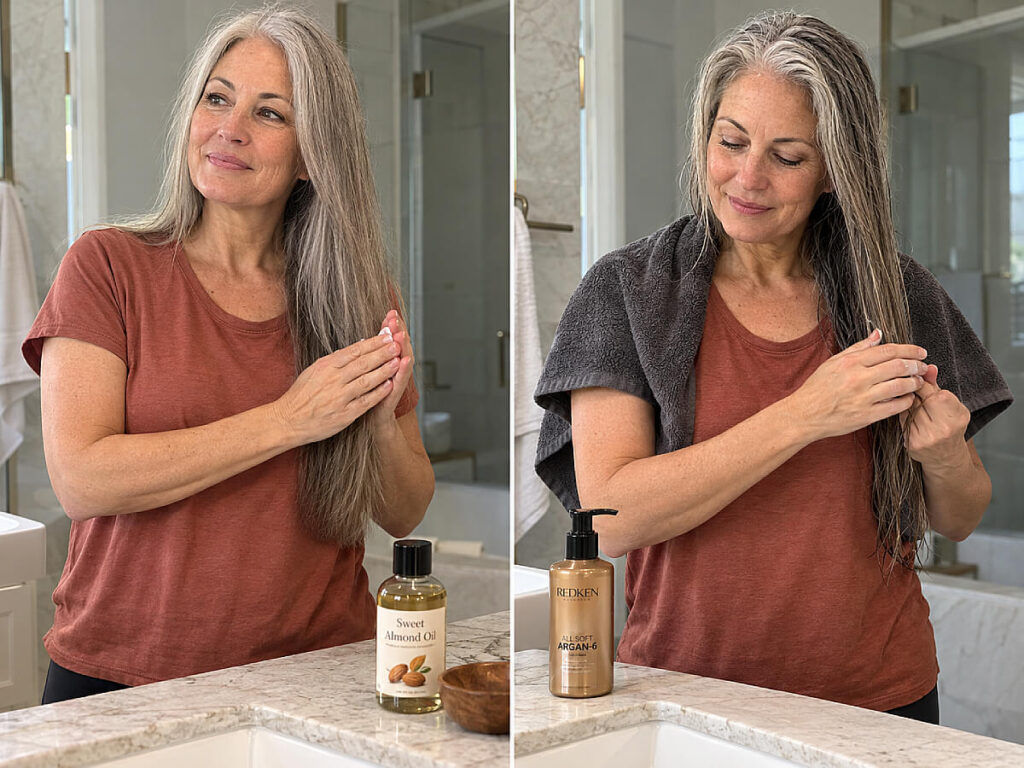
Here is one way to organize those steps. Before washing, once a week, do an oil treatment on your lengths and ends. Something like pure argan oil or sweet almond oil, applied thirty minutes to an hour before you shampoo, gives the hair a deep conditioning hit that your regular conditioner might not be achieving on its own. This is your nourishment step, and because you’re washing it out, you don’t have to worry about weight or greasiness.
Then after washing, after your conditioner is rinsed and your hair is towel-blotted to damp, that’s when you reach for your serum. Apply it from the mid-lengths down, work it through evenly, and then style as usual. The serum is doing your protection and finish work, controlling frizz, reflecting light, shielding from heat if you’re blow-drying, and giving the hair that smooth, healthy appearance that makes people ask if you just got it done. Redken All Soft Argan-6 Oil is one I reach for constantly in this step because it bridges the gap beautifully, it has enough oil content to feel nourishing but the formulation is light enough to work as a finishing serum without heaviness.
The reason this combination works where using just one product often doesn’t is that you’re addressing two different things. The oil addresses internal moisture, cuticle health, and the long-term condition of the strand. The serum addresses the immediate surface, how the hair looks, how it behaves in your environment, and how well it holds up through the day. Trying to get one product to do both jobs is why so many women feel like nothing ever really works for their hair, and that frustration is understandable because the marketing rarely tells you this.
Sandra, if I had to give you a single starting point based on what you described, I’d say ditch the oil as a leave-in for now and replace it with a lightweight serum on your ends only. Give it two weeks. If your hair still feels rough and dry even after that, then add a weekly pre-wash oil treatment and see if that changes things. Hair care troubleshooting is really just changing one variable at a time and paying attention, and you clearly are paying attention, which means you’re already ahead of most people.
You deserve a routine that actually works for the hair you have right now, not the hair you had at thirty or the hair that works for someone else. These products are tools, and knowing which tool to reach for and when is honestly most of what good hair care comes down to.