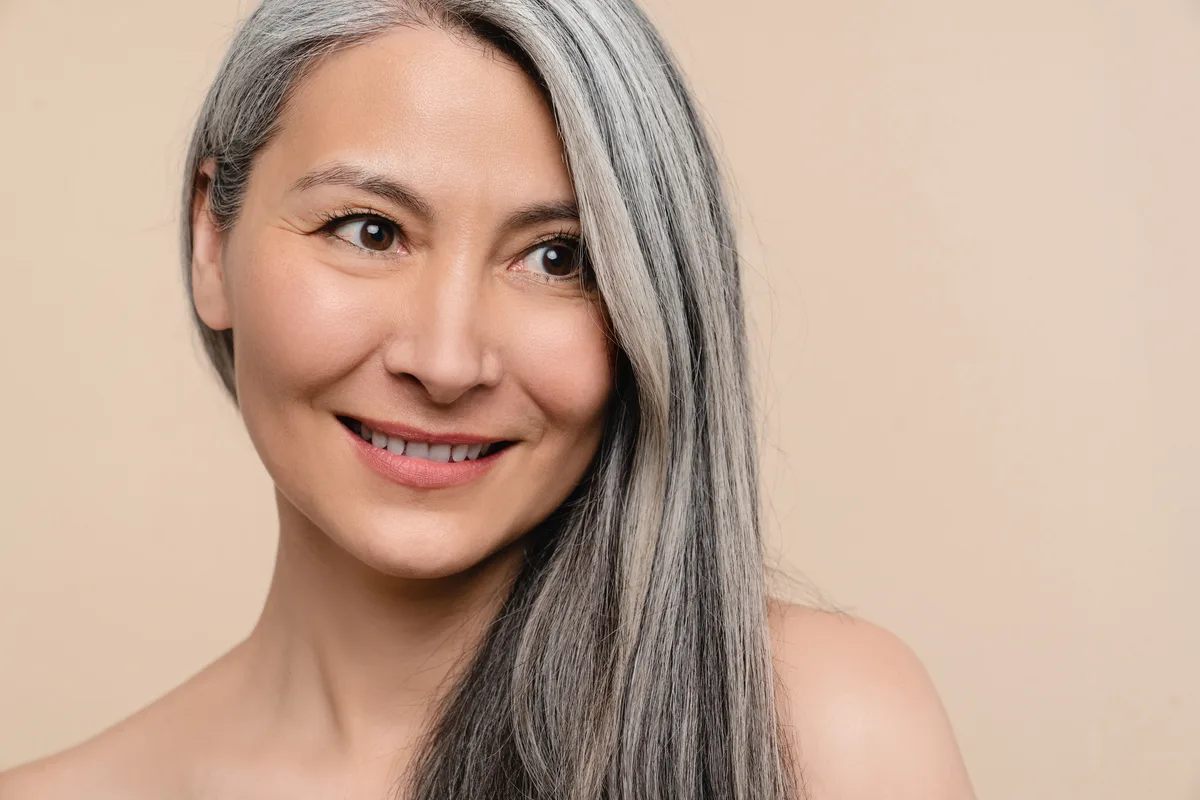
How Gray Blending with Highlights Works
Highlights do the softening, lowlights do the grounding. Pale silver pieces near the face and through the top break up the line where color meets gray. A few darker lowlights underneath stop the result from looking flat or one-tone, which is what keeps blended hair looking like hair rather than a helmet of silver.
Grow-out is the point, not the problem. Because blending works with your natural regrowth instead of covering it, appointments stretch further apart — typically every 10 to 14 weeks for a refresh, rather than every four weeks for full root coverage. Ask your stylist to place the lightest pieces where your gray already shows most, usually the parting and hairline.
Bring a photo, and point to the roots. Show your stylist exactly how much dark root you want visible and how bright you want the face frame. “Soft dimension” means different things to different people, so the photograph — and the root shadow in it — is the instruction that matters most.
Gray Blending with Highlights for Women Over 50
1. Long Wavy Silver-Gray Blending, City Camera in Hand

Long wavy hair with dark gray and silver dimension, worn loose on a city street. The waves break up the color so the blend reads soft from every angle, never striped.
Suits: naturally wavy hair; women growing out color for the first time. Upkeep: purple shampoo once a week, trim every 8–10 weeks. Ask for: fine silver highlights woven through a dark gray base, soft layers.
2. Silver-Gray Bob with Dark Roots in the Salon
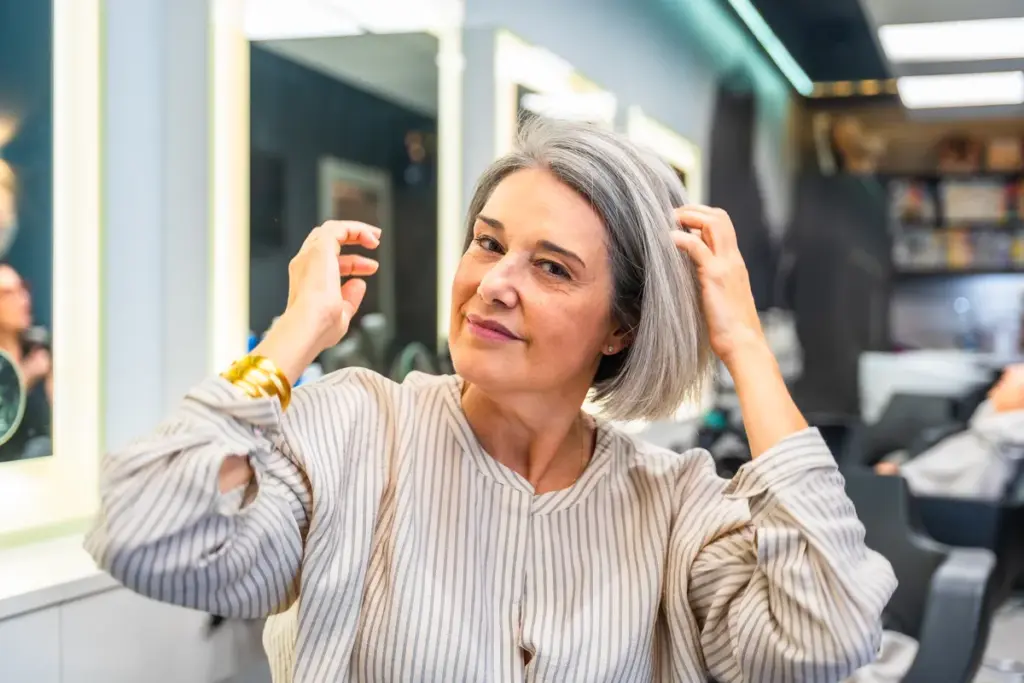
A silver-gray bob with a darker shadow at the roots and nape, photographed in the salon with hands in the hair. The shadow root is what makes this blend low-maintenance — regrowth joins it instead of fighting it.
Suits: straight to slightly wavy hair; bob lovers who hate root appointments. Upkeep: root-shadow refresh every 10–12 weeks. Ask for: a silver-gray bob, shadow root, soft blended ends.
3. Long Silver-Gray Hair from Behind, Darker Dimension Throughout
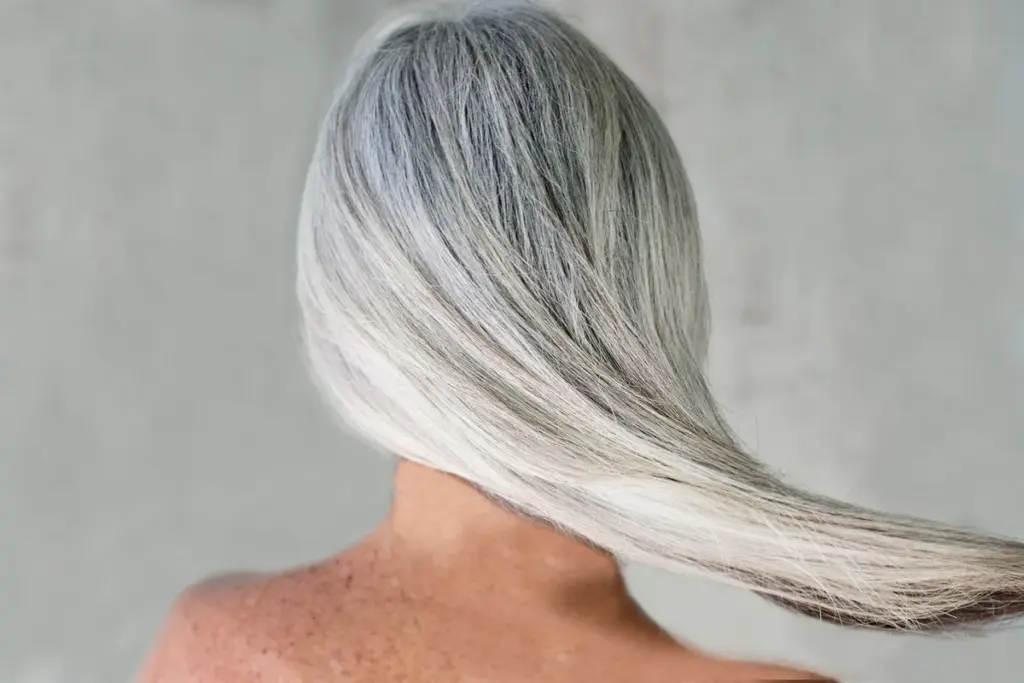
A back view of long silver-gray hair with darker gray strands running through it. From behind, the dimension is the whole story — no single flat sheet of color.
Suits: long hair kept long; women who wear their hair down most days. Upkeep: gloss every 8 weeks to keep silver bright. Ask for: long layers, silver highlights over a darker gray base.
4. Long Silver-Gray Hair with Darker Lowlights in Profile
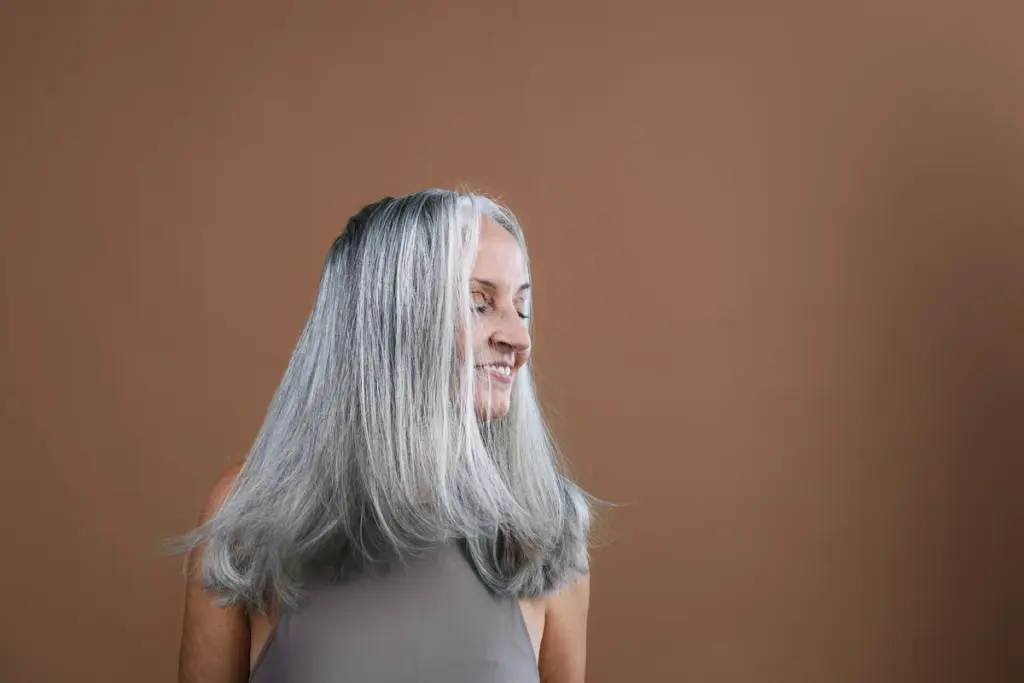
Long silver-gray hair with darker lowlights, seen in profile against a warm brown backdrop. The lowlights give the silver somewhere to sit — without them, this much silver could look washed out.
Suits: straight hair; women whose gray is still patchy. Upkeep: lowlight refresh every 10–12 weeks. Ask for: silver highlights plus darker lowlights, long layers.
5. Long Silver-Gray Hair with Face-Framing Silver Pieces
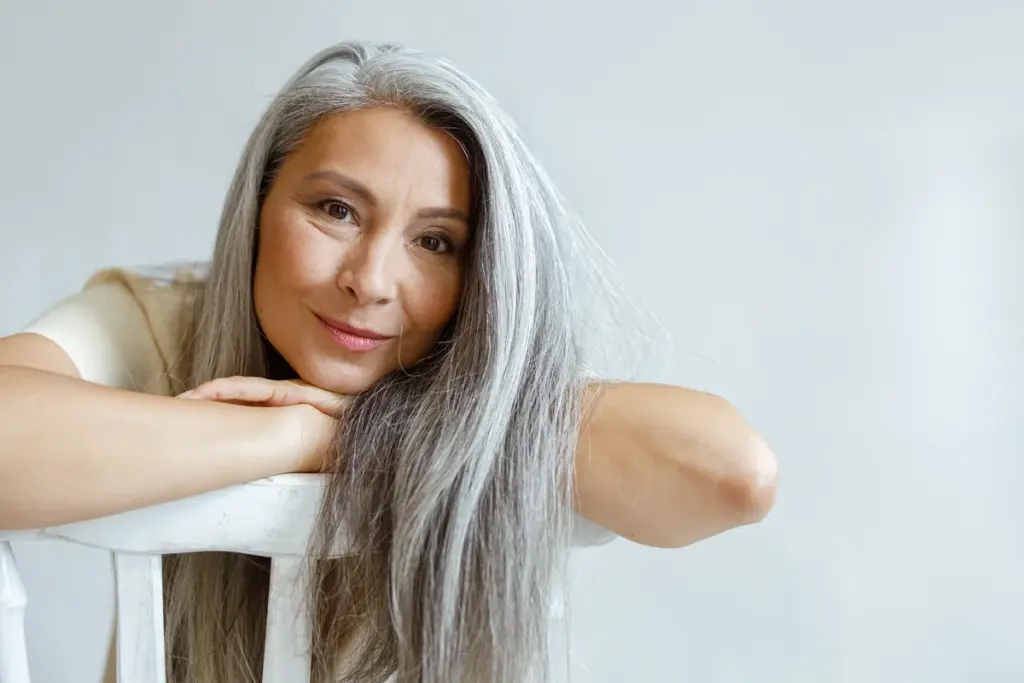
Long straight silver-gray hair with darker gray-brown undertones and bright silver pieces framing the face, photographed resting on a chair. The face frame is the brightest part — exactly where gray usually shows first.
Suits: straight hair; women whose gray concentrates at the hairline. Upkeep: face-frame refresh every 8–10 weeks. Ask for: bright silver face-framing pieces over a darker silver-gray base.
6. Sleek Silver-Gray Hair with Dark Charcoal Lowlights
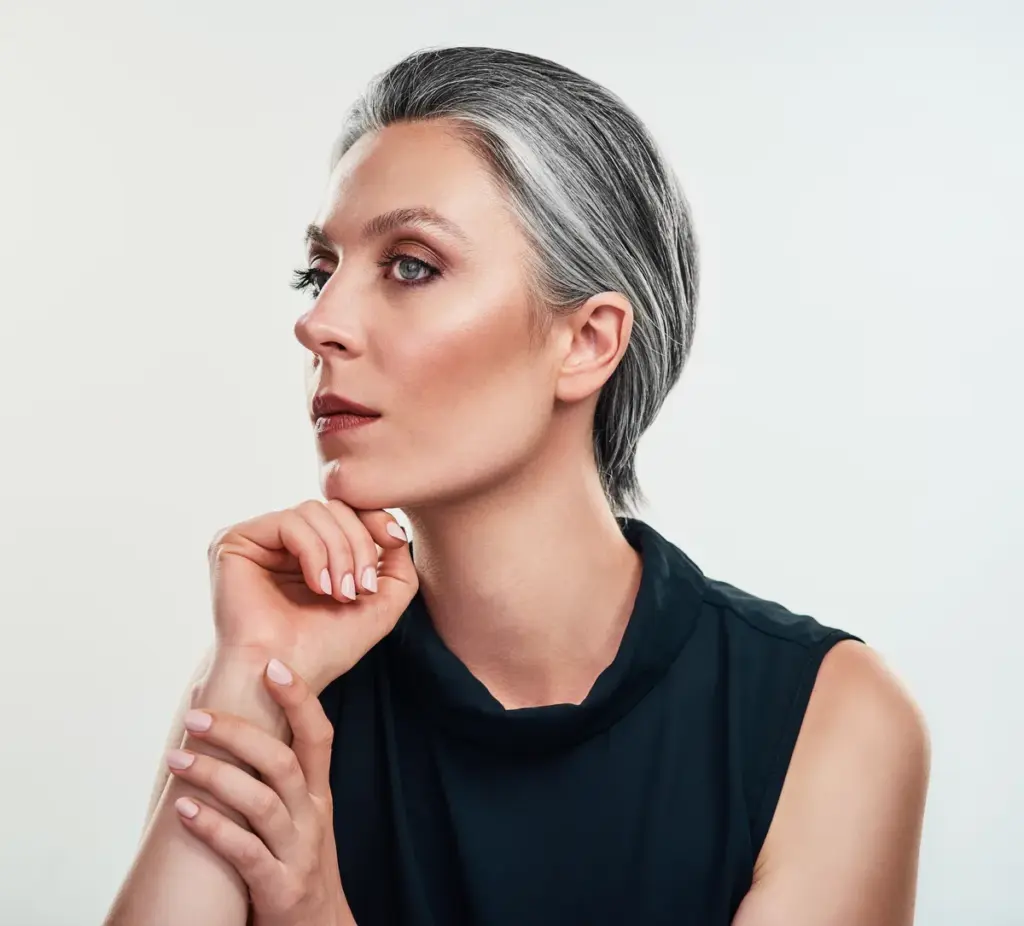
Sleek silver-gray hair with dark charcoal lowlights in profile. This is the sharpest blend in the gallery — the contrast is deliberate, but the edges between light and dark stay soft.
Suits: sleek straight hair; women who like visible dimension. Upkeep: smoothing serum, lowlight refresh every 10 weeks. Ask for: sleek silver-gray with charcoal lowlights, blunt ends.
7. Long Dark Gray Hair with Silver Face-Framing Highlights

Long dark gray hair with silver face-framing highlights on a smiling woman in a striped top. Keeping the base dark and lighting only the face frame is the gentlest first step into blending.
Suits: dark hair going gray slowly; first-time blenders. Upkeep: face-frame highlights every 10–12 weeks. Ask for: silver face-framing highlights, dark gray base kept natural.
8. Voluminous Wavy Silver-Gray Hair with Darker Undertones
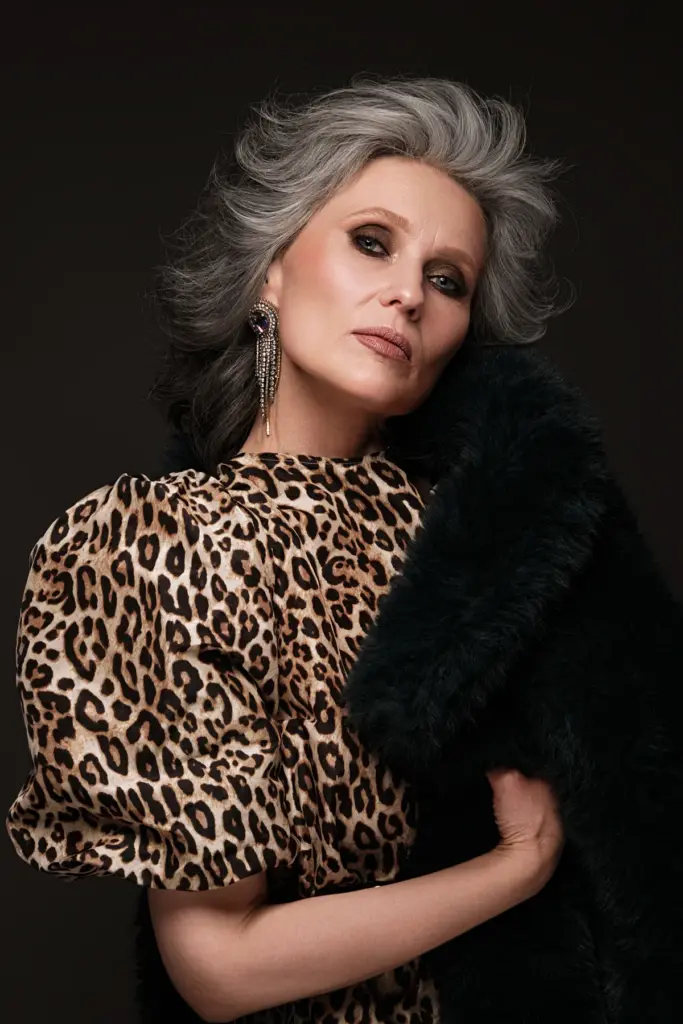
Voluminous wavy silver-gray hair with darker undertones, worn with a leopard print top. Volume and waves scatter the light, so the blend looks different — and natural — every time the head turns.
Suits: thick or wavy hair; women who want movement, not a flat color. Upkeep: volumizing mousse, trim every 8 weeks. Ask for: layered waves, silver highlights over darker undertones.
9. Long Straight Hair with Silver Highlights Through a Darker Base
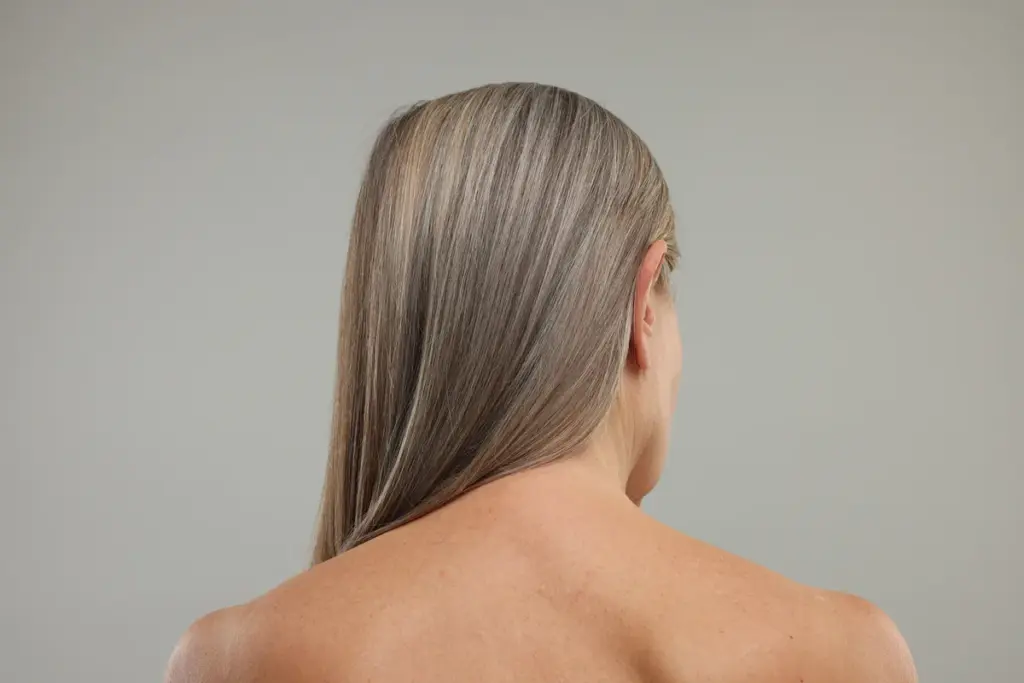
A back view of long straight hair with silver-gray highlights woven through a darker brown-gray base. Straight hair shows blending honestly — there are no waves to hide behind — and this one passes that test.
Suits: straight hair; women who wear their hair down and straight. Upkeep: gloss every 8 weeks, trim every 10 weeks. Ask for: fine silver highlights woven through a darker brown-gray base.
10. Dark Roots Growing Out into Soft Silver-Gray Blending
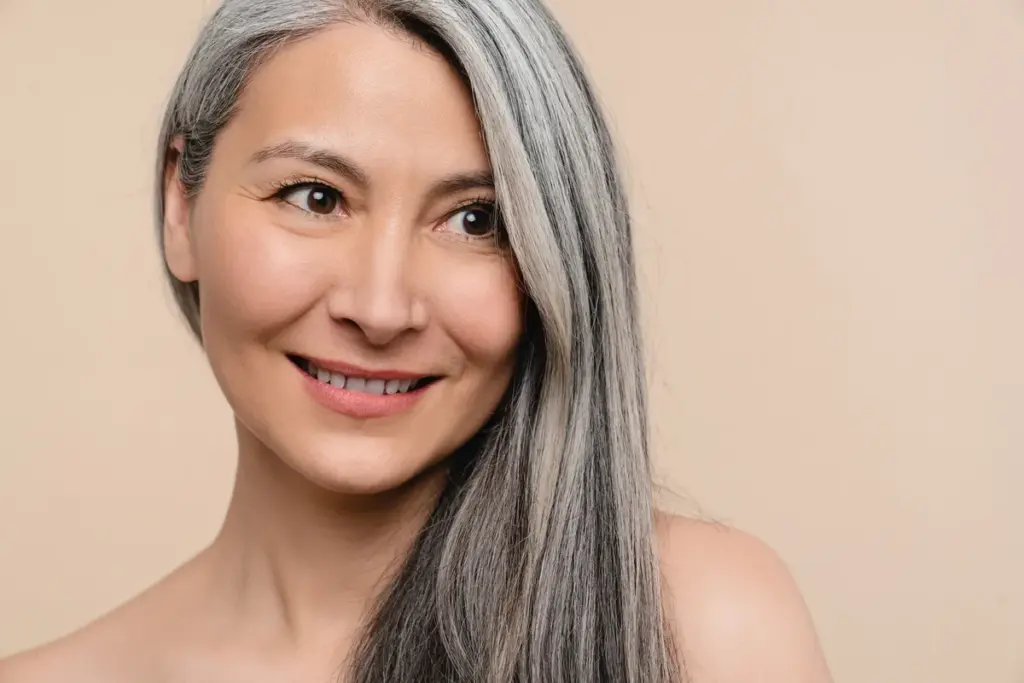
The gallery’s textbook grow-out: dark roots melting into soft silver-gray lengths on a smiling woman. This is what successful blending looks like a few months in — no line, no stripe, just a gradient.
Suits: women mid-grow-out; anyone tired of the dye line. Upkeep: tone refresh every 10–14 weeks. Ask for: a root melt into silver-gray, soft face-framing brightness.
11. Bright Silver Face Frame Blending into Darker Gray Lengths
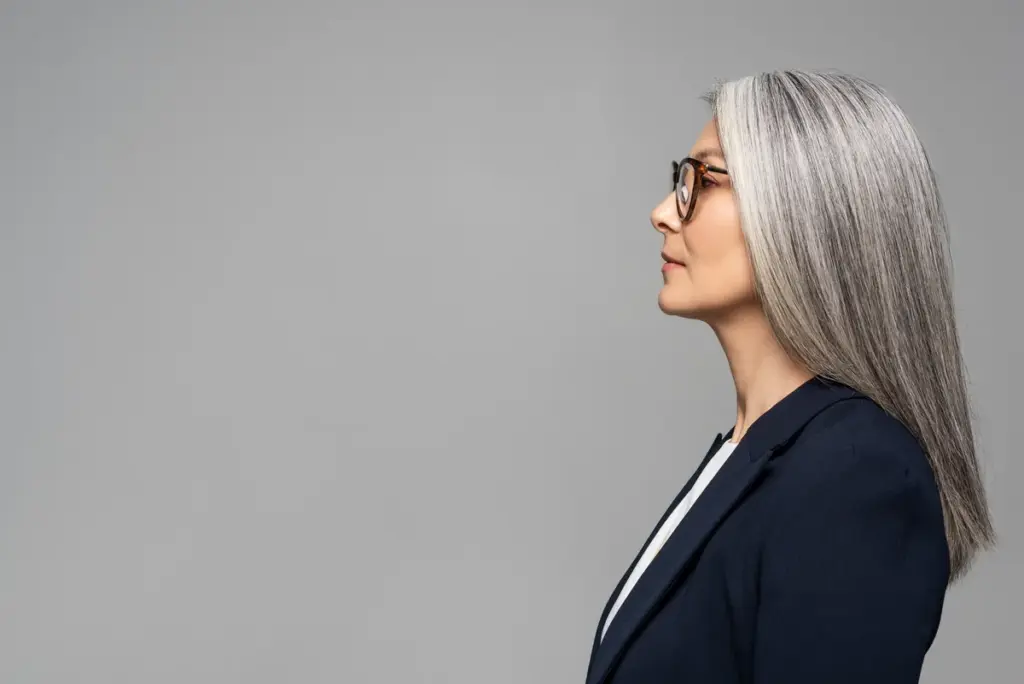
Long straight hair with a bright silver face frame blending into darker gray lengths, seen in profile with glasses. The brightness sits exactly where the eye lands first — around the face.